As Korea automates everyday life, older adults risk being locked out
Kiosks, apps and disappearing bank branches have made South Korea one of the most self-service economies in the world — and turned digital ability into a condition for ordinary daily life that many older Koreans do not yet meet.
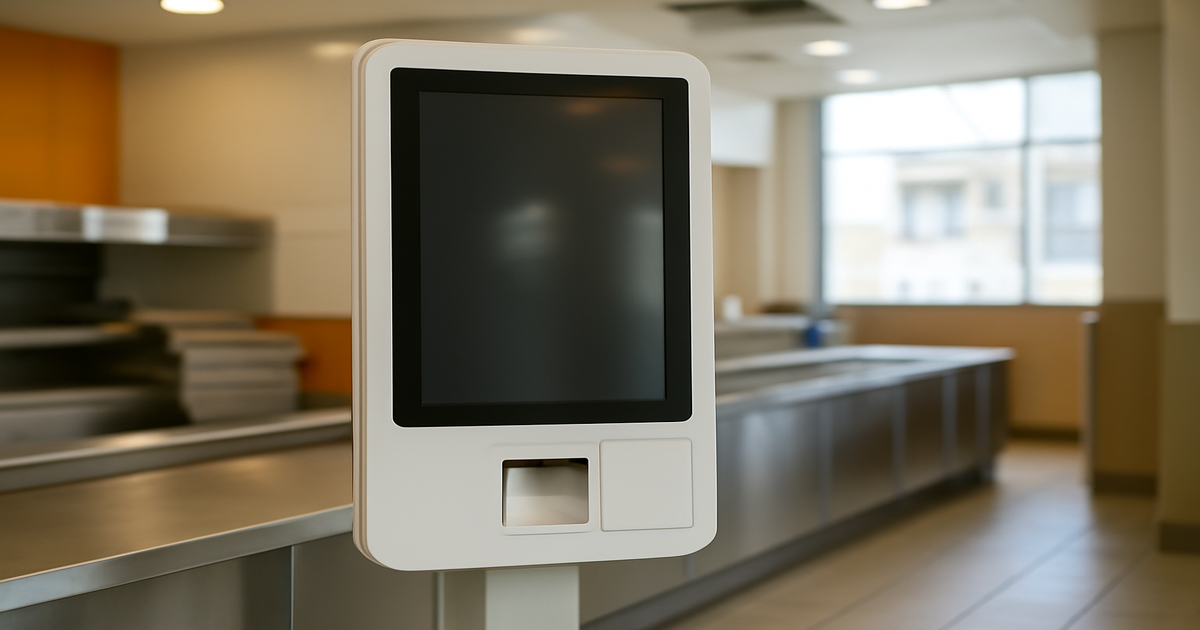
Ordering lunch in a Korean city increasingly begins at a screen. Touch-screen kiosks spread through fast-food chains, cafés and independent restaurants during the pandemic years and kept spreading afterwards, driven by minimum-wage growth and labour shortages. Banking followed the same path in reverse: branch networks have thinned year after year as transactions moved into apps. Trains, taxis, government paperwork, even apartment parking — the default interface of daily life has become a touchscreen connected to an account.
For most of the population this is convenience. For a significant share of older Koreans it is a locked door. The government’s annual digital divide survey, run by the science and ICT ministry, has consistently measured the digital capability of citizens aged 55 and over at around 70 percent of the general-population benchmark — the lowest of the vulnerable groups the survey tracks, below low-income households, farmers and fishers, and people with disabilities. The gap is not about owning a smartphone, which is nearly universal, but about the layered competence a kiosk assumes: reading an interface quickly, trusting it with payment, recovering from a mis-tap while a queue forms behind.
The consequences are mundane and cumulative. Missed discounts that exist only in apps. Reliance on children for train tickets and medical appointments. Meals skipped rather than negotiated through a screen. Surveys of older adults regularly record kiosks and mobile-only services among the situations in which respondents feel most excluded — a quiet tax on exactly the cohort growing fastest in a society where more than one person in five is now 65 or older.
Policy has begun to respond. Accessibility standards for kiosks — larger type, voice guidance, staff-call buttons — have been phased into law, and local governments and telecom companies run digital-literacy classes that reach hundreds of thousands of learners a year, often taught in senior welfare centres. Some municipalities require that public-facing services keep a human channel open alongside the digital one. These measures help, but they trail the pace of automation: each year of branch closures and app-first services raises the bar the classes are teaching toward.
The deeper question the Korean case poses is one every ageing, digitalising society will face: whether self-service is offered as an option or imposed as a condition. Korea’s own experience suggests the difference is a design decision, not an inevitability — a kiosk with a patient mode and a staffed counter beside it includes the same customer that an app-only pathway excludes.
What makes the country worth watching is that both forces here are extreme: few societies are automating faster, and few are ageing faster. How Korea reconciles the two will read, for a lot of other countries, like their own near future.