The economics behind the world's lowest birth rate
South Korea's fertility rate fell to 0.72 in 2023 before edging up to 0.75 in 2024, the first rise in nine years — figures whose causes read less like a cultural mystery than a price list.
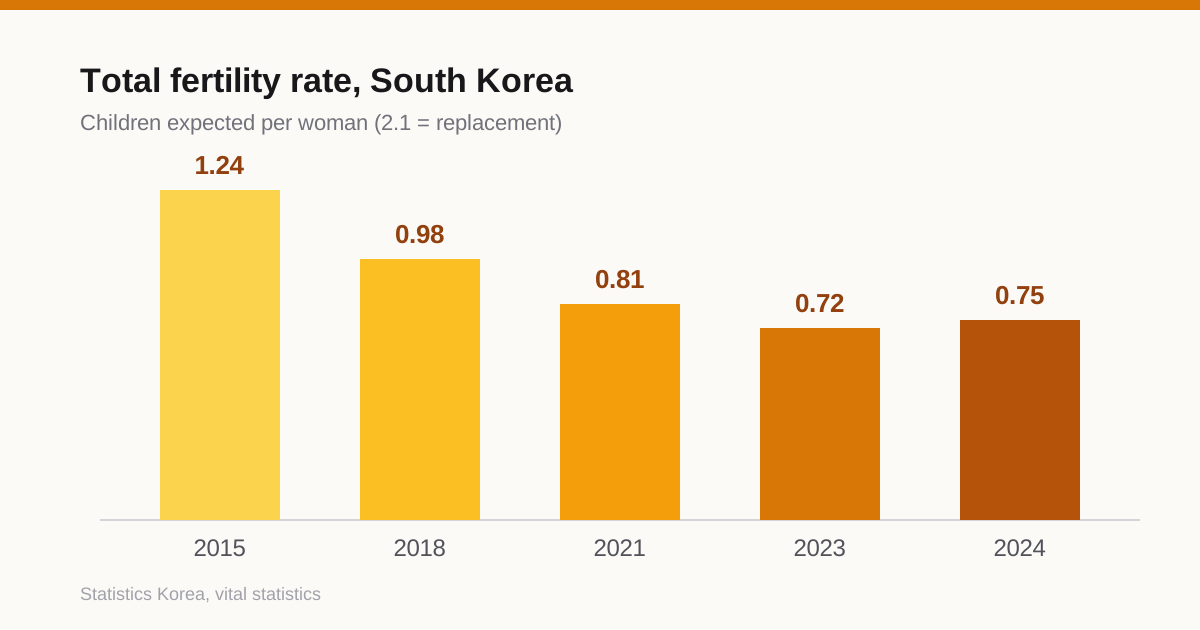
No developed country has recorded fertility numbers like South Korea’s. The total fertility rate — children expected per woman — stood at 1.24 in 2015, slipped below one in 2018, and reached 0.72 in 2023, according to Statistics Korea, before ticking up to 0.75 in 2024, the first increase in nine years. Annual births, above one million in the early 1970s, came in near 240,000 in 2024. A rate of 2.1 holds a population steady; at Korean levels, each generation is roughly a third the size of its grandparents’.
Foreign commentary often reaches for culture to explain this. Korean researchers mostly reach for prices. Housing is the largest: the apartment stock in the capital region — where the jobs are — carries price-to-income ratios that put ownership out of reach of most young couples without family wealth, and the jeonse deposit system converts even renting into a heavily leveraged position. Education is the second: the private tutoring norm prices a child not at the cost of raising one but at the cost of keeping one competitive, a figure households can see in their neighbours’ spending years before they decide.
The third price is paid in careers, mostly by women. Korea’s labour market rewards uninterrupted tenure and long hours; its gender wage gap is the widest in the OECD, and mothers who leave work around childbirth — still a common pattern — return, if at all, to lower-paid and less secure jobs. When motherhood carries a visible, lifelong earnings penalty, delaying it is not reluctance but arithmetic. Marriage itself has become part of the calculation: it is closely tied to childbearing in Korea, where births outside marriage remain rare, so postponed weddings compound into forgone children.
Governments have spent heavily against the trend — hundreds of trillions of won in cumulative low-fertility budgets since 2006, spread across child allowances, subsidised childcare, parental-leave expansions and housing support for newlyweds. The consensus among Korean demographers is not that the spending was wasted but that it was mispriced: cash transfers offset a fraction of the housing-education-career bill, and the programmes least used — fathers’ parental leave, flexible hours — were the ones workplace culture quietly discouraged.
The 2024 uptick drew attention precisely because the system behind it may be shifting. Marriages rose from 2023 as pandemic-delayed weddings cleared, large firms came under public pressure over parental-leave usage, and the cohort of women in their early thirties — the peak childbearing ages — temporarily grew. Whether that makes 0.75 a floor or a pause, no official projection treats a return toward one as imminent.
The economic consequences arrive on a schedule already visible: a workforce that starts shrinking within this decade’s planning horizon, pension contributions concentrated on fewer shoulders, and regions outside the capital emptying first. Fertility statistics are usually read as social indicators. In Korea’s case they are the economy’s leading indicator, published monthly.