The cost of the career break for women in Korea's workforce
South Korea's gender wage gap — about 31 percent in 2022, the widest in the OECD — is largely the price of interrupted careers, and closing it has become an economic necessity as the workforce shrinks.
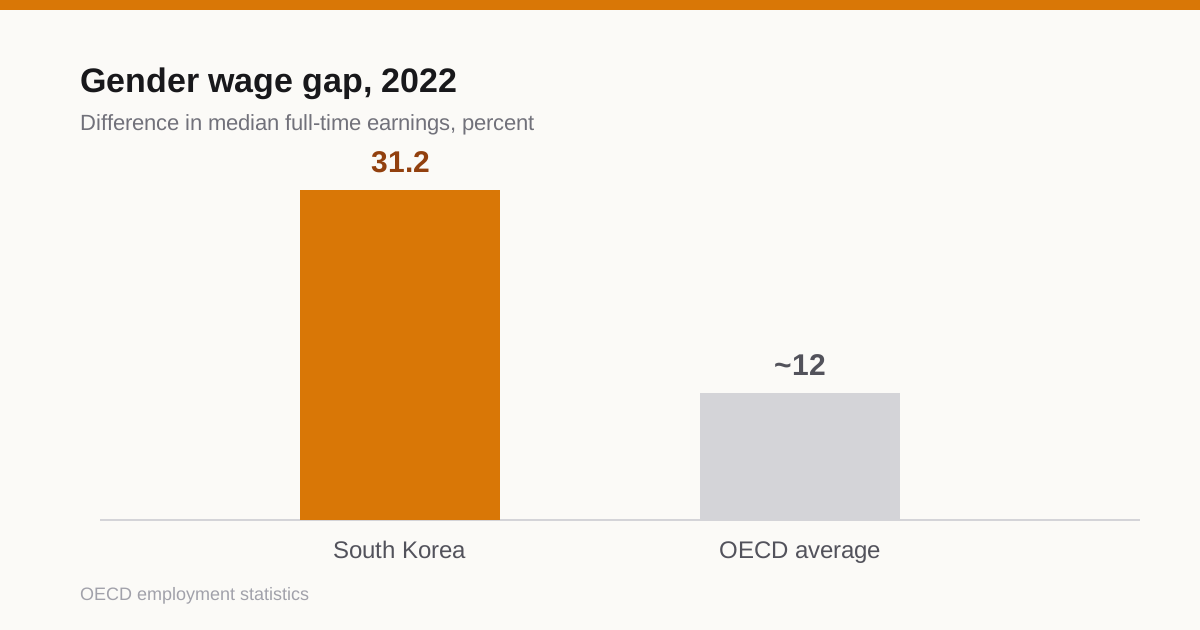
One statistic has led the OECD’s gender comparisons for as long as the comparison has existed: South Korea’s gender wage gap, the difference between male and female median full-time earnings, stood at about 31 percent in 2022 — roughly two and a half times the OECD average of around 12 percent, and the widest among member countries every year since Korea joined the data.
The gap is not primarily a story of unequal pay for the same work. Korean women now out-graduate men from university, and young women’s earnings track young men’s closely through their twenties. The divergence opens in the thirties and never closes — the signature of the career interruption. Statistics Korea’s surveys have counted over a million women whose careers were broken by marriage, childbirth or childcare, and the country’s female employment curve still traces the “M” shape that most developed economies flattened a generation ago: high participation in the twenties, a trough in the child-raising thirties, and a return afterwards into different, lesser jobs.
The mechanism is the return, not the exit. A Korean workplace built on seniority pay, long hours and unbroken tenure treats a gap of years as a reset: women re-entering after childcare cluster into irregular contracts, small firms and service roles where pay and protections are thinnest. Each year out compounds — the wage gap between men and women in their forties and fifties dwarfs the gap among the young, and thin female representation in management follows from the same arithmetic, since the tournament for promotion is run during exactly the years interrupted.
The irony is that the formal architecture is generous. Korea offers parental leave of up to a year per parent per child with wage-replacement benefits, statutory reduced working hours for parents, and an expanding public childcare network. Usage tells the truer story: mothers take leave at rates far above fathers, and surveys of workers consistently cite career damage — the fear that leave marks one as uncommitted — as the reason entitlements go unused. Policy has kept raising fathers’ incentives, including bonus benefit rates when both parents take leave, precisely to redistribute the interruption the labour market punishes.
What has changed the debate is scarcity. With the working-age population shrinking, female employment is no longer an equity agenda but the largest untapped labour reserve the economy has; think tanks routinely estimate that closing participation gaps would offset a meaningful share of coming workforce decline. Employers facing shortages have begun to discover flexibility on their own — a discovery that tends to arrive faster than cultural change but does, eventually, drag it along.
Korea’s experience compresses a lesson many economies learned more slowly: benefits on paper do not equal careers in practice while the penalty for using them survives. The wage-gap series, published each year, is less a measure of attitudes than of that penalty — and it will mark the country’s progress one percentage point at a time.