The retail investors who reshaped Korean stock markets
Around 14 million Koreans held listed shares by the mid-2020s, a constituency large enough that market structure questions once left to regulators are now argued in public.

In March 2020, as foreign investors sold Korean equities heavily during the pandemic crash, individual Koreans bought. They kept buying through the year in volumes without precedent, and the domestic press gave the phenomenon a name — donghak ants, borrowing from a nineteenth-century peasant uprising to describe small investors absorbing what foreign institutions were unloading. The benchmark KOSPI index, which had fallen to around 1,450 in March 2020, closed above 3,000 for the first time in January 2021. The buying was widely credited for it.
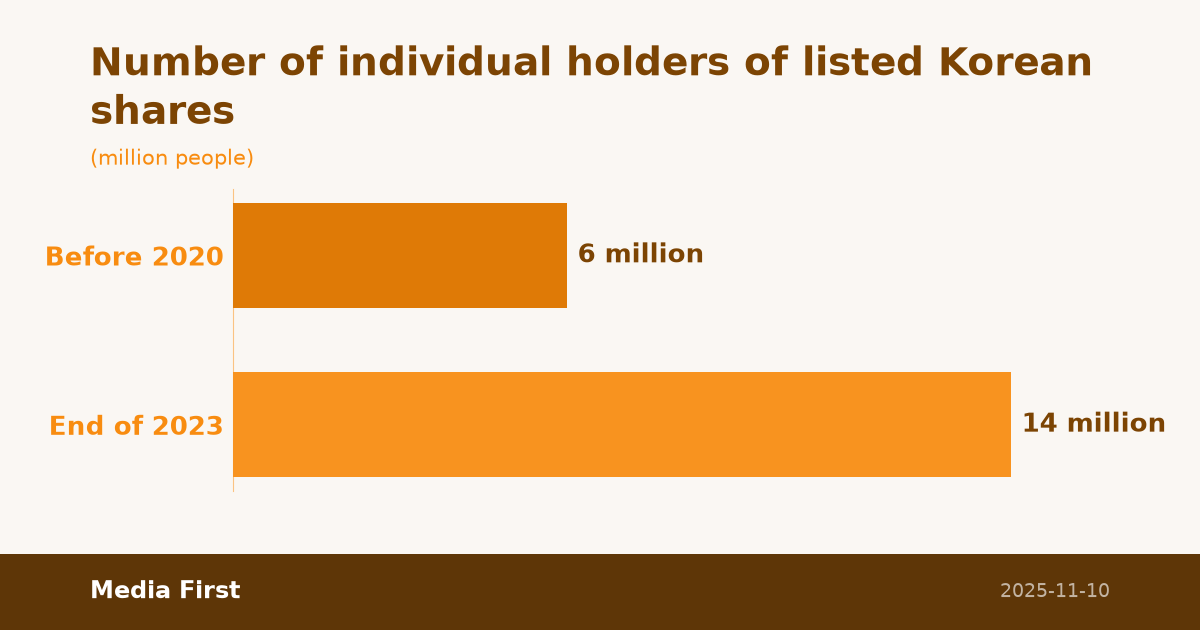
The scale outlasted the rally. Korea Securities Depository tallies of holders of listed domestic shares reached roughly 14 million by the end of 2023, up from around 6 million before 2020. In a country of 52 million people, that is well over a quarter of the population and something close to half of all households. Brokerage account opening was frictionless by then, executed on a phone in minutes, and the fee competition among app-based brokers had driven commissions toward zero.
The money did not stay at home. Overseas holdings — the seohak ants, in the matching coinage — grew into a substantial outbound flow, with Korean retail custody of US-listed securities approaching $100 billion by 2024 on depository figures. The concentration of that portfolio in a small number of American technology names, often through leveraged and index products, means a significant slice of Korean household savings now moves with the Nasdaq rather than with domestic earnings. It also means the won faces a persistent structural bid for dollars from ordinary savers, a channel that barely existed a decade earlier.
Politics followed the numbers. Short selling, long a technical matter of market microstructure, became a mass-participation controversy. Korea banned it outright in March 2020, restored it partially for large-cap indices in 2021, and imposed a full ban again from November 2023 while regulators worked on detection systems for illegal naked short sales and on levelling collateral and repayment terms between institutional and retail participants; the restriction was lifted in 2025. Whether short selling harms retail investors is genuinely disputed among economists. What is not disputed is that the question is now settled in the arena of public opinion rather than in a regulatory consultation.
The same dynamic reshaped the corporate governance debate. The persistent valuation gap between Korean listed companies and comparable firms elsewhere — the “Korea discount” — has been attributed to low dividend payouts, opaque holding structures, and spin-offs and rights issues that dilute minority shareholders. When shareholders were mostly institutions, these were technical complaints. With 14 million individual holders, they became constituency politics, and regulators responded with a corporate value-up programme in 2024 encouraging listed firms to disclose capital allocation and shareholder return plans. Tax treatment of investment income has been debated on similar terms, with implementation of a broader financial investment income tax repeatedly postponed.
Whether mass shareholding makes households better off is a separate question from whether it makes them louder. Korean retail portfolios are typically concentrated, actively traded and often leveraged through margin lending, all of which historically correlate with underperforming a simple index. The pandemic cohort learned about drawdowns during 2022. Yet the participation has not reversed, in part because the alternatives look worse: deposit rates sat below inflation for much of 2022 and 2023, and the property market that absorbed previous generations’ savings now requires debt levels many younger households cannot service.
That is the deeper shift. Equities in Korea have moved from being one asset class among several to being the default savings vehicle for a generation priced out of housing — which guarantees that market policy will stay a mass political subject.