Korea built a rocket and now needs an industry to fly it
Two successful Nuri flights and a dedicated space agency gave Korea the hardware and the institution, but the commercial demand that sustains a launch business is the part no ministry can order into existence.
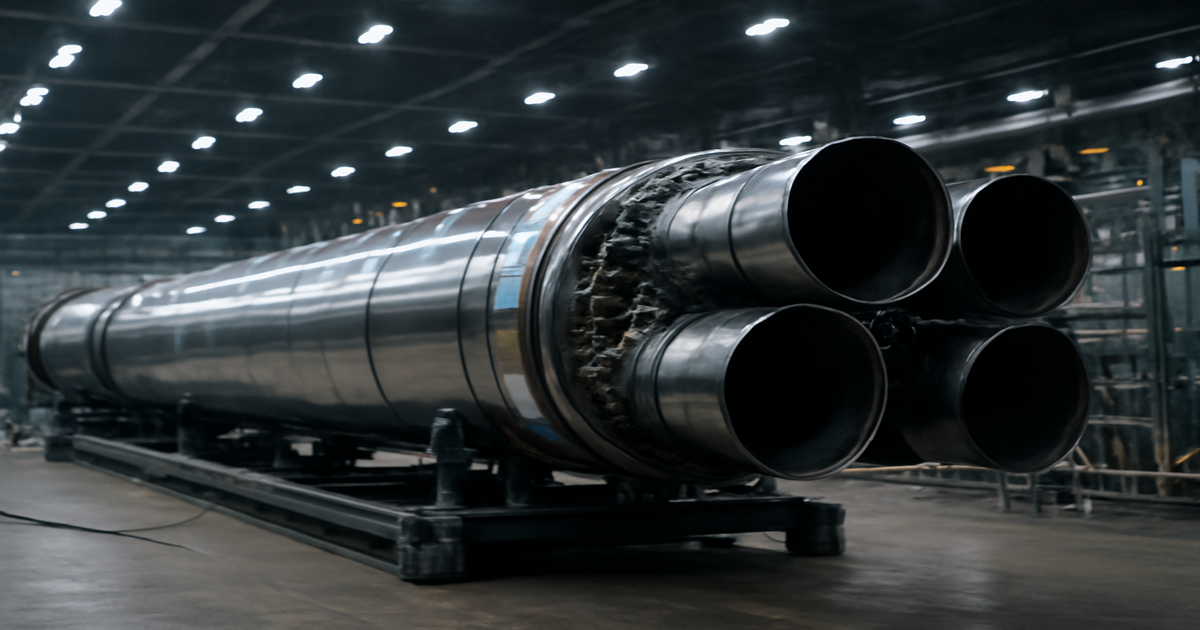
South Korea’s first attempt to put a satellite into orbit on a domestically developed rocket ended just short. The Nuri launcher lifted off in October 2021 and flew its profile almost to completion, but the third-stage engine shut down early and the dummy payload fell back without reaching orbital velocity. The second flight, in June 2022, worked: Nuri placed a performance verification satellite where it was supposed to go, making Korea one of a small group of countries able to launch a payload of useful mass with a vehicle of its own design. A third flight in May 2023 carried working spacecraft rather than test mass, including a small Earth-observation satellite and a set of cubesats built by domestic firms and universities.
The vehicle itself is a conventional three-stage kerosene and liquid-oxygen design, built around a 75-tonne-thrust engine clustered four ways in the first stage, sized to put roughly 1.5 tonnes into a sun-synchronous orbit several hundred kilometres up. Nothing about it is technically exotic. That was the point: the programme’s purpose was to prove that Korean industry could design, qualify and fly a full launch system, having previously flown only with a Russian-built first stage.
The institutional half followed the technical one. The Korea AeroSpace Administration opened in May 2024 in Sacheon, in the country’s southern aerospace manufacturing belt, consolidating responsibilities that had been divided among ministries and the national research institute. Its founding budget of roughly 700 billion won a year is modest in the comparison it invites — NASA’s annual appropriation runs above 25 billion dollars, the European Space Agency’s above seven billion euros — and the agency’s practical mandate is less about exploration than about coordinating a supply chain.
That supply chain is the strategic bet. In 2022 Hanwha Aerospace was selected as the system integration contractor for Nuri under a contract worth some 286 billion won, taking on the later flights in the series through the late 2020s and, with them, the transfer of design and manufacturing knowledge accumulated in state laboratories. The model is explicit: the state develops the vehicle, then hands it to a company expected to operate it commercially. Satellite manufacturing has followed a similar path, with domestic firms moving from subcontracted components toward complete platforms.
The difficulty is demand. Korea’s own requirements are real but finite — a reconnaissance constellation whose first satellites went up on commercial American rockets from December 2023, a domestic positioning system planned for the mid-2030s, communications and Earth-observation programmes. Beyond that lies an export market in which price is set by a competitor flying reused boosters and selling rideshare slots at a few thousand dollars per kilogramme. An expendable medium-lift vehicle flown once every year or two cannot amortise its fixed costs against that. The honest argument for the programme is sovereign access rather than commercial advantage: the ability to launch without asking, which is a security good, not a market one.
Korea has begun building for the following round. Development of a next-generation launcher, approved in 2023 at a budget above two trillion won, targets a first flight around 2030 with roughly ten tonnes to low orbit and enough performance for lunar transfer, with reusability treated as a design objective rather than an afterthought. A lunar lander is pencilled in for the early 2030s. The Danuri orbiter, which reached the Moon in December 2022 and returned imagery and magnetometer data, demonstrated that Korean teams can build and operate deep-space payloads — while also demonstrating the gap, since it bought its ride from SpaceX.
The measure to watch is cadence, not capability. Launch industries are learning systems: costs fall with flight rate, and flight rate depends on someone having something to launch. Korea has now proved it can build the rocket. The harder question, which the next several years of the Hanwha contract will answer, is whether a domestic market of this size can generate enough payloads to keep the production line warm.