The banjiha problem is a housing supply problem in disguise
South Korea has promised to empty its semi-basement flats for years, but the arithmetic of where a few hundred thousand households would go has never been solved.
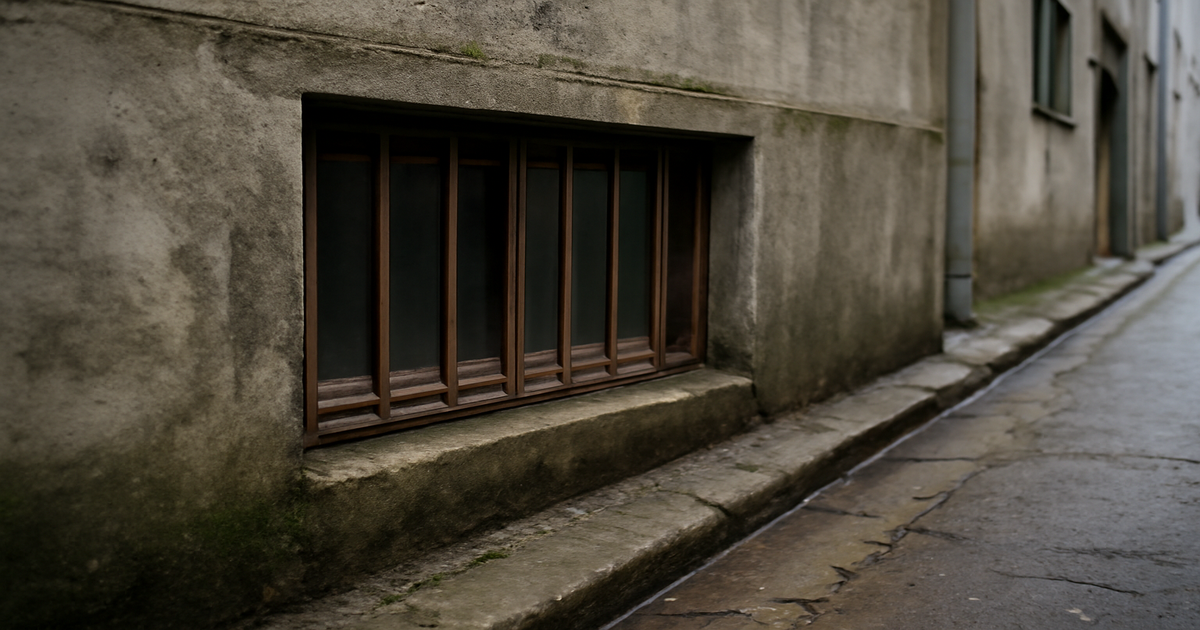
The banjiha is one of the few features of South Korean housing that needs no translation abroad. Half sunk below the pavement, lit through a window that sits at ankle height for anyone walking past, it is the cheapest formal housing available in the country’s most expensive city. The 2020 Population and Housing Census counted roughly 327,000 households living in basement or semi-basement units nationwide, about 1.6 percent of all households. Around 96 percent of them were in the Seoul capital region, and roughly 200,000 were in Seoul itself. Outside the metropolitan belt, the housing type barely exists.
That concentration is not an accident of taste. A 1970 amendment to the building code required new buildings above a certain size to include basements usable as civil-defence shelters, and a 1984 revision made it lawful to rent those spaces as dwellings. The result was a large stock of below-grade rooms in low-rise neighbourhoods, built by owners who had already paid for the excavation and had every reason to earn rent on it. For tenants, the trade was explicit: accept damp, poor light and limited ventilation in exchange for a deposit and monthly rent that put a person within commuting distance of central Seoul jobs. For decades, that trade was treated as a private matter.
The flooding of August 2022 ended that framing. Record rainfall overwhelmed drainage across southern Seoul, and water entering below street level had nowhere to go. Three members of one family died in a semi-basement flat in Gwanak District when the unit filled faster than the door could be opened against the outside water pressure. The deaths converted a housing-quality issue into a safety issue overnight, which is usually what it takes for a policy to move.
Seoul’s response was a phase-out pledge: no new residential permits for below-grade units, and a long-run programme to remove existing ones from the residential stock over one to two decades. Supporting measures included a monthly housing voucher for banjiha households moving to ground-level homes, public purchase of banjiha buildings for conversion to storage or community use, and priority placement in public rental housing. Each of these is defensible on its own terms. Together they still do not answer the question the pledge raises.
The question is arithmetic. If a household leaves a banjiha, it needs a comparable unit above ground at a price it can pay. Public rental housing is the intended destination, but the waiting lists in the capital region already run into the tens of thousands of applicants, and turnover is slow because tenants who secure a unit rarely leave it. A voucher of a few hundred thousand won a month narrows the gap between a semi-basement rent and a ground-floor rent, but only for as long as it is paid, and only if a suitable unit exists in the same neighbourhood. Uptake of Seoul’s voucher has run well below the eligible population, which is the pattern one would expect if the binding constraint is supply rather than subsidy.
There is also a quieter problem. Removing units from the residential stock without replacing them raises rents for exactly the households the policy is meant to protect. A demolished or converted banjiha is one fewer cheap dwelling in a market that has not produced small, affordable, above-ground rental units at anything like the necessary rate. The nearest thing to a solution is unglamorous: build or acquire enough modest units in the same districts, then close the basements as the replacements come online, in that order.
Framed that way, the banjiha is not an anomaly to be abolished but a symptom to be read. It is what the bottom of a housing market looks like when the supply of decent cheap homes runs out and demand keeps arriving anyway. Pledges to eliminate it are, in substance, pledges to build something else first.