More Koreans are moving to the countryside than the farms need
Rural in-migration runs to hundreds of thousands of people a year, but almost all of it is people moving to the country rather than into farming.
South Korea keeps two separate counts of people leaving the cities, and the difference between them explains most of what is happening. The Ministry of Agriculture, Food and Rural Affairs, working with Statistics Korea, publishes annual figures for gwinong, people who move to a rural area and register as farmers, and gwichon, people who move to a rural area without taking up farming. In the early 2020s the combined total ran to several hundred thousand people a year, peaking above half a million in 2021 before settling lower. Roughly ninety-nine percent of that flow is gwichon.
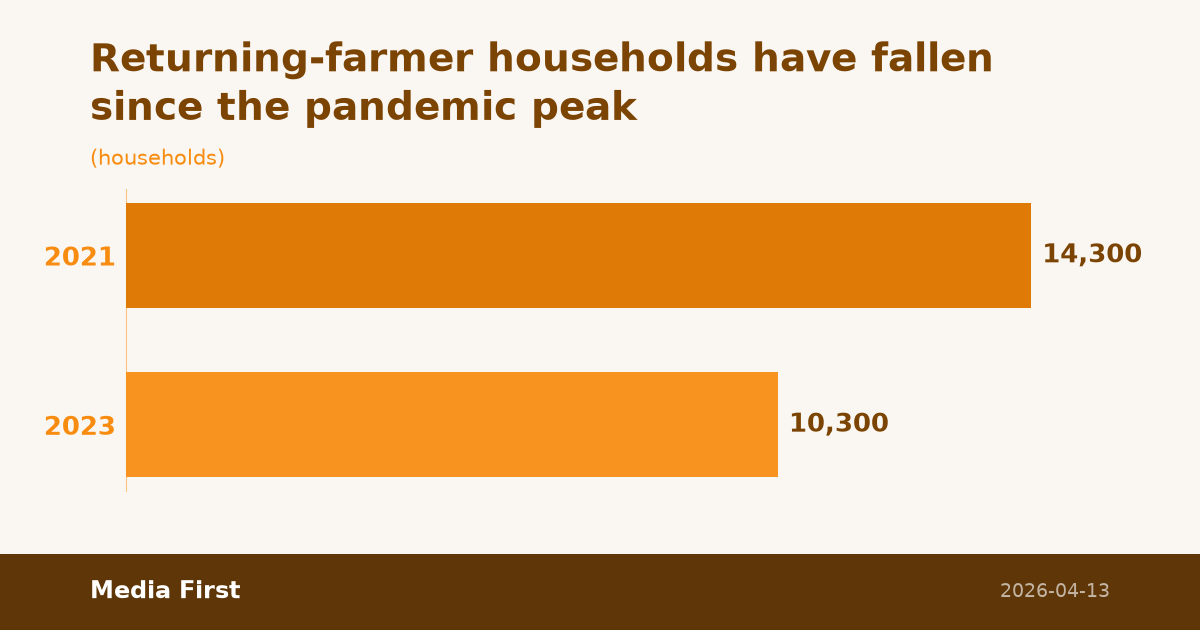
The farming half of the ledger is small and shrinking. Returning-farmer households rose through the pandemic years to about 14,300 in 2021, then fell to roughly 12,400 in 2022 and about 10,300 in 2023. The pandemic bump is not mysterious: remote work, a weak urban services labour market and unusually cheap credit all pushed in the same direction for two years, and all three reversed. What remains is closer to the long-run trend, and the long-run trend is down.
Who is moving has changed more than how many. Households headed by people in their thirties and younger have become a visibly larger share of returning farmers, even as the absolute count falls, and provincial governments have oriented their recruitment programmes around them. The standard package now includes a settlement allowance, subsidised rent in a village guesthouse or trial-residence unit for six months to a year, matched savings schemes, and access to leased farmland and equipment. Some counties add relocation grants for a spouse’s job or a child’s school. These are not trivial sums, and for a household with modest savings they can cover the first year.
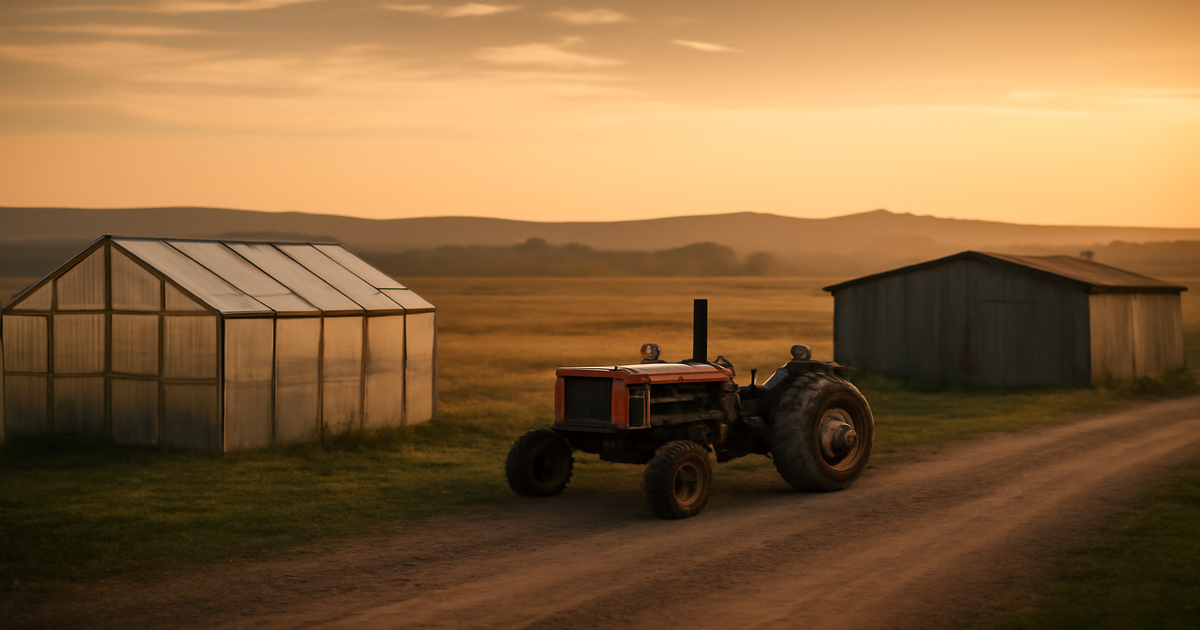
The first year is rarely the problem. Ministry survey work on settlement outcomes has consistently found that a meaningful minority of returning-farmer households leave within five years, and that the reasons cluster: income below expectations, difficulty acquiring or leasing land at a workable price, isolation, and the discovery that farming is a capital-intensive small business rather than a lifestyle. A greenhouse, a tractor and a cold-storage unit can absorb more capital than a small apartment, and the payback period is measured in years of a commodity price the farmer does not set.
The economics of the gwichon flow are entirely different, and much healthier. Someone who moves to a small town to keep a remote job, open a café, take a public-sector post or retire is not competing with agricultural returns at all. They pay for housing, groceries, fuel and services in a local economy that has been losing customers for thirty years, and they do not need the land market to cooperate. Most of the demographic benefit rural counties actually receive comes from this group, which is why the more sophisticated local recruitment schemes have quietly stopped requiring a farming plan.
That distinction matters for how the policy should be judged. If the goal is to arrest rural population decline, gwichon is the relevant flow and the relevant instruments are housing, broadband, clinics and schools. If the goal is to replace an ageing farming workforce, the numbers are not close: an average age of Korean farm operators in the mid-sixties and around ten thousand new farming households a year do not balance. Recruitment cannot substitute for the structural question of farm size, mechanisation and who consolidates the land that retiring farmers leave behind.
The romantic version of the move persists in television and in county brochures, and it does the flow no favours. A household that arrives expecting quiet and finds a low-margin agricultural enterprise tends to leave. A household that arrives expecting a cheaper place to live with a longer commute to anything tends to stay. The counties that have grown have mostly been honest about which one they were offering.