One-person households are quietly rewriting Korea's consumer economy
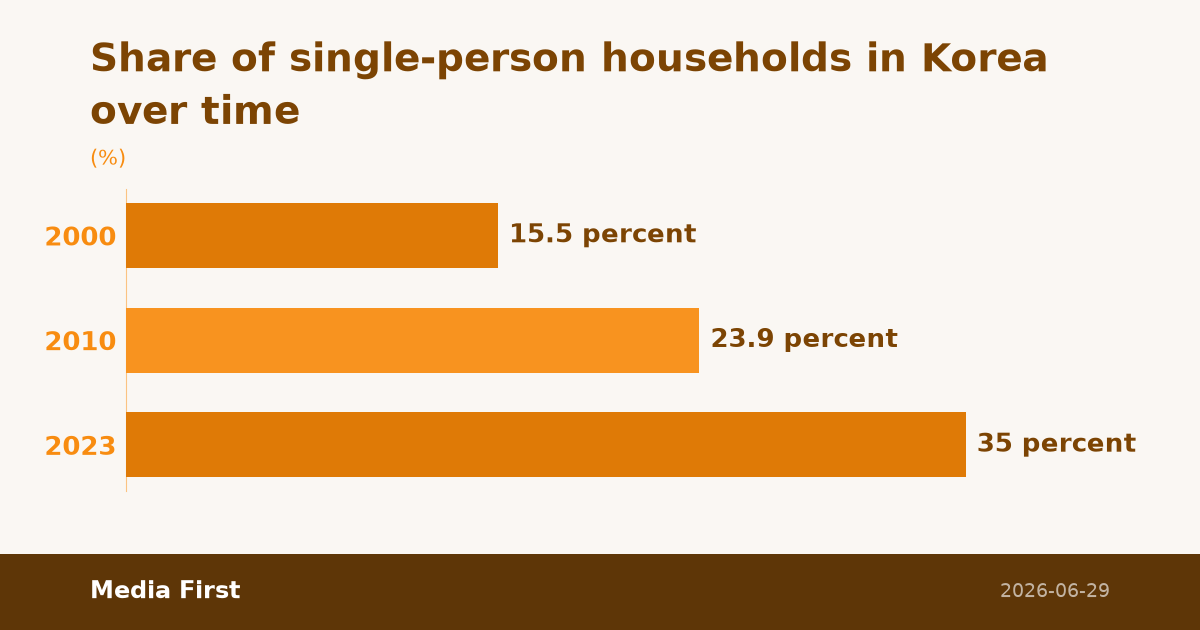
One-person households grew from 15.5 percent of Korean households in 2000 to more than 35 percent by 2023, and the consumer economy — from convenience stores to apartment floor plans — has reorganised around them.
The most consequential household in the Korean economy now contains one person. In the 2000 census, single-person households made up 15.5 percent of the total; by 2010 the share was 23.9 percent, and by 2023 it had passed 35 percent — roughly 7.8 million households, the largest household type in the country, ahead of couples and far ahead of the four-person family around which Korea’s housing, retail and welfare systems were originally designed.
The category is really three groups wearing one label. Young singles concentrate in the capital, delaying or forgoing the marriage that Korean convention still treats as the gateway to family formation. Middle-aged singles include the divorced and the never-married of a generation for whom marriage stopped being universal. And elderly singles — disproportionately widowed women — are the fastest-growing and most economically fragile segment, overlapping heavily with the country’s elderly poverty problem. Policies aimed at “single households” tend to miss because the three groups need opposite things: the first, housing and prices; the last, income and care.
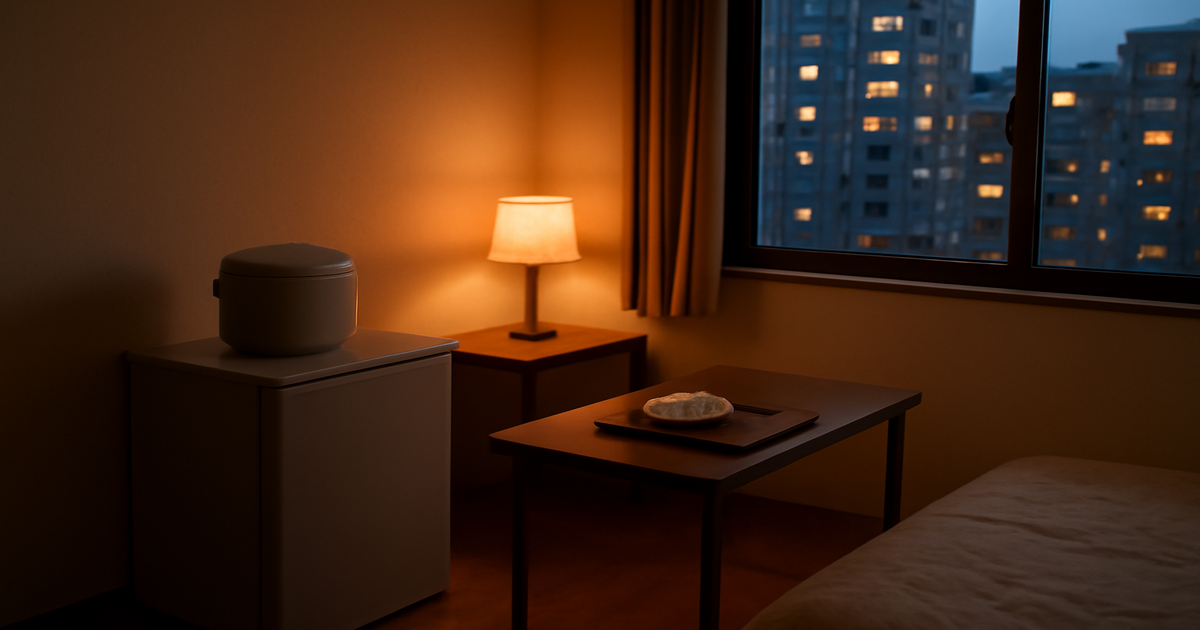
Retail noticed before government did. Korea’s convenience stores — among the densest networks on earth — evolved into single-household infrastructure: fresh meal boxes, single servings, parcel pickup, banking terminals. Grocers shrank pack sizes and built out the meal-kit and ready-meal aisles; appliance makers produce compact rice cookers, mini drum washers and one-door refrigerators as standard lines; food delivery platforms found their heaviest users in people cooking for one. Marketers long ago coined a vocabulary — solo dining, solo drinking — for behaviour that has shifted from stigma to default in a single generation.
Housing has adjusted less gracefully. Demand from millions of singles meets a stock dominated by family-sized apartments, so the shortfall is absorbed by studio units, officetels and subdivided multiplexes — segments with the weakest tenant protections, where the jeonse-fraud losses of the early 2020s were concentrated. Planning rules and public housing supply have tilted toward small units, but the mismatch between what the household structure is and what the housing stock assumes will take decades to work off.
The macro arithmetic is double-edged. Smaller households spend more per person — duplicated appliances, rents and subscriptions make singles a consumption tailwind per capita — but they save less, pool no risks, and age without in-house caregivers, implying heavier future claims on public care and transfers. An economy of one-person households runs warmer in retail and colder in resilience.
Beneath the consumer story sits the demographic one: households have multiplied even as population growth stalled, because the same forces suppressing Korea’s birth rate — housing costs, career pressure, changing norms around marriage — are the forces producing singles. The convenience-store meal box and the 0.7-range fertility rate are, in that sense, entries in the same ledger.